Weeds and pests
Chilean needle grass and Coolatai grass
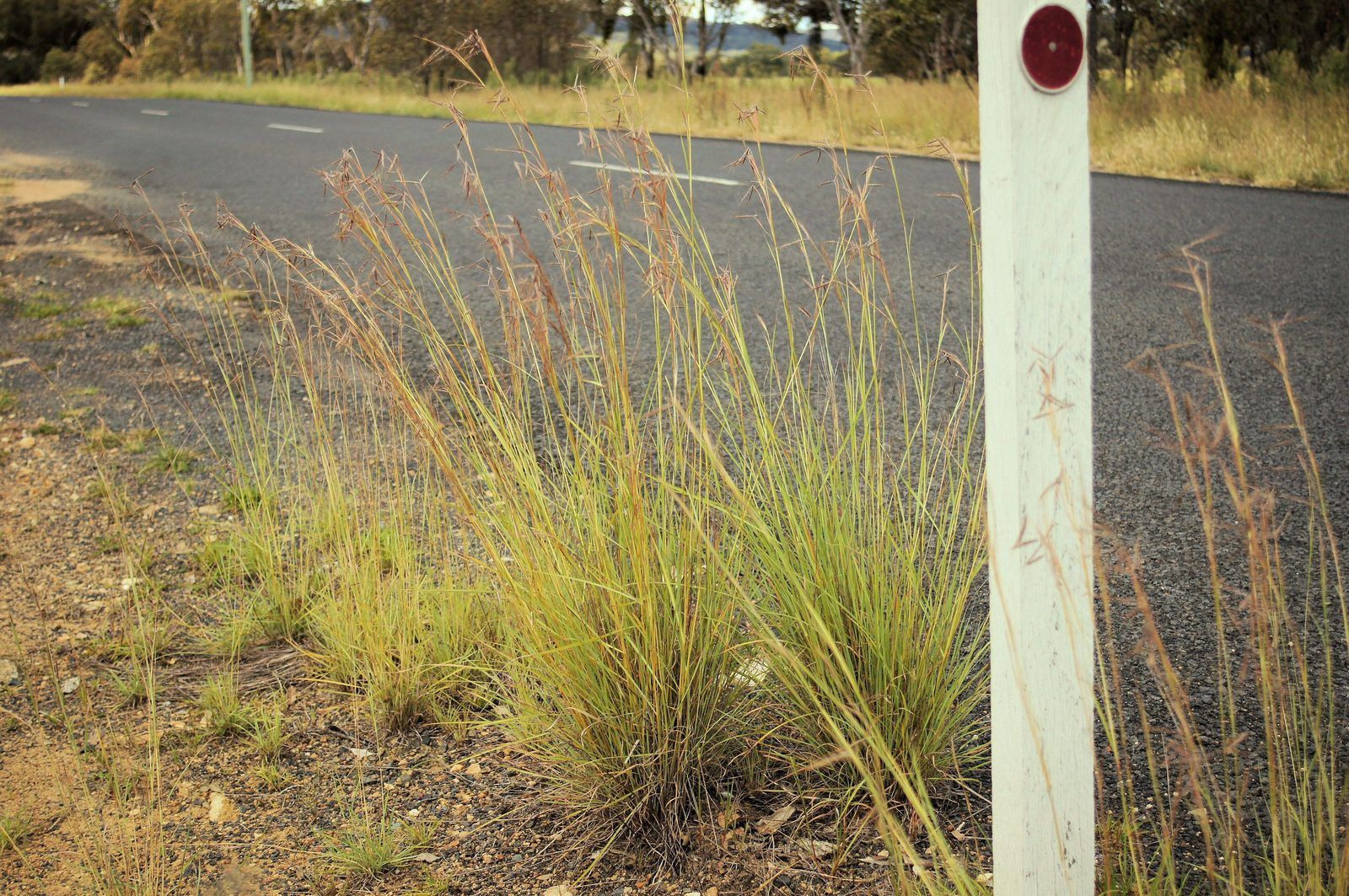
Chilean needle grass and Coolatai grass are both tussock grasses that arrive as seed on machinery, vehicles and stock, and both are hard to shift once they have a seed bank. Late spring is when Chilean needle grass seed heads come out and Coolatai grass, which is summer-active, is growing, so it is the time to learn them and to think about what comes through the gate. Both are on the priority weed list for the Northern Tablelands and Tenterfield Shire.
Chilean needle grass
NSW WeedWise says this grass is widespread on the Northern Tablelands. It grows in tussocks to about 1 m. Look for:
- flat leaves 1 to 5 mm wide, ribbed and coarse to touch, with a small tuft of hairs where the blade meets the sheath
- purplish seed heads from late spring, with most flowering from November to February
- a pale brown seed 8 to 10 mm long, very sharp at the base, with a twisted awn 6 to 9 cm long
- a small ring of teeth, the corona, where the awn joins the seed. WeedWise says only Chilean needle grass has it, which separates it from the native spear grasses it resembles.
It also hides seed. WeedWise says extra seeds form inside the nodes of the flowering stems and make up about a quarter of a plant’s seed. The council’s management plan notes these mature even if the seed head is removed, so slashing off the heads does not stop it seeding.
The costs are to pasture and to stock. WeedWise says it can halve pasture productivity during summer, that stock find the flower stalks unpalatable, and that the sharp seed injures eyes, pierces hides and downgrades wool. The council plan cites University of New England research on the Northern Tablelands showing that its success comes from a large, long-lived store of seed in the soil that persists for years even when no new seed is added.
Coolatai grass
WeedWise describes Coolatai grass as a long-lived, summer-active tussock grass up to 1.5 m tall, widespread in northern NSW on roadsides, travelling stock routes, pastures and remnant bush. Look for:
- greyish-green leaves, flat, 2 to 3 mm wide and rough to touch
- leaves that turn orange-red in winter, especially after frost
- seed heads made up of paired spikes, each with several awns, from spring to autumn.
The council’s plan for Coolatai grass describes it as tolerant of drought, fire and herbicide, and as one of the few perennial grasses able to invade undisturbed bush. For graziers the issue is quality. WeedWise says mature stands fall below 40 per cent digestibility and 7 per cent protein. It readily dominates pasture where ground cover is under 70 per cent.
How they spread
Both travel the same way. WeedWise lists:
- Machinery and vehicles. Seed lodges in slashers, mowers and vehicles. For Coolatai grass it advises against slashing infested roadsides when seed is present, or doing them last and then cleaning the machine thoroughly.
- Stock. Chilean needle grass seed catches in wool and hair and can stay there for months. Coolatai seed sticks to animals, and cattle graze the seed heads.
- Fodder. Hay cut from an infested paddock carries seed.
Hygiene
These are the habits WeedWise recommends, and they cost little:
- Ask where machinery has been before it comes onto the place, and have it cleaned before it enters clean paddocks.
- Buy fodder from clean areas and ask for a vendor declaration.
- Hold new or returning stock in a small paddock first. WeedWise suggests at least a week for Coolatai grass, and notes that not all Chilean needle grass seed drops out of a fleece.
- Check gateways, driveways and around sheds, where the first plants usually appear.
Control options
For both grasses WeedWise puts healthy, competitive pasture first.
- Isolated plants. Chip out Chilean needle grass with a hoe. Pull or dig Coolatai before it seeds. Bag the plants and burn them without dropping seed.
- Grazing. For Chilean needle grass, WeedWise suggests short, heavy grazing in winter and heavy grazing in spring to reduce flower stalks. Summer grazing does not suppress it.
- Cropping. On arable ground, two to three years of fodder crops or cropping with weed control runs the seed bank down before a pasture is re-sown.
- Herbicide. WeedWise says Coolatai tolerates most commonly used herbicides, so suppression is the likely result, and warns that non-selective treatment of Chilean needle grass leaves bare patches for seed to fill. Product, rate and timing are for the label and an agronomist or the weeds officer.
The council plan sets a local requirement for Chilean needle grass: where it is present, owners and occupiers must actively control it and reduce its numbers and spread, and where it is absent the land is to be kept free of it. If you find a tussock you cannot name near a gate or track, take a sample with a seed head to the weeds officer at Tenterfield Shire Council before the slasher goes through it.
General information only. Check what suits your own country and conditions.
Sources
- NSW WeedWise: Chilean needle grass (Nassella neesiana)
- NSW WeedWise: Coolatai grass (Hyparrhenia hirta)
- Tenterfield Shire Council: Weed Control Management Plan, Chilean Needle Grass
- Tenterfield Shire Council: Weed Control Management Plan, Coolatai Grass
- Tenterfield Shire Council: Regional priority weeds